




Best value Canada car rental from top brands









Canada car hire tips

Where to pick up your car rental in Canada
There are over 95 car hire locations in Canada, and the most popular city is for car hire in Toronto, ON.

Top car rental brands in Canada
The most popular car rental brands in Canada are Thrifty, Dollar, Budget, Hertz and Discount Car & Truck Rental.

Best time to rent a car in Canada
The cheapest months to pick up your car hire in Canada are November and February.

Local currency in Canada
Canadian Dollar (CAD)

Canadian side of road
Right


Hire a car in Canada
Canada is the world’s second-largest country and a territory that still feels new.
From Halifax to Ottawa or Ontario, this is a rich patchwork of cultures and landscapes. In between the rugged mountains, flat prairie fields and wooded havens, you’ll discover big and small cities, each with their own personality. The size of the country can be difficult to envision before arriving.
The Trans-Canada Highway, which connects all ten provinces is over 8000 km long – so the best way to make the most of your visit to Canada is to head straight for the car rental desk when you arrive.
Frequently Asked Questions about Car Hire in Canada
Question: Why is renting a car in Canada great for my holiday?
Short answer: Canada, the world’s second-largest country by area, spans six time zones and encompasses extraordinary diversity, from the Rocky Mountains and Pacific rainforests to Prairie wheat fields, the Great Lakes, French-speaking Quebec, and the rugged Atlantic coastline. Car rental in Canada offers the freedom to explore this vast nation’s incredible landscapes, vibrant cities, and unique cultural regions at your own pace.
Renting a car in Canada is essential for experiencing the true scale and diversity of this remarkable country. While Canada’s major cities have public transport, the country’s most spectacular attractions lie between them, including national parks, mountain passes, pristine lakes, coastal highways, and remote wilderness areas. Canada is vast beyond imagination, for example driving from Vancouver to Toronto takes approximately 45 hours of continuous driving covering 4,400km, equivalent to driving from London to Baghdad. This immensity means most visitors focus on specific regions rather than attempting to see everything. A rental car transforms your Canadian holiday from city-hopping into an unforgettable journey through some of North America’s most stunning scenery, whether you’re driving the Icefields Parkway through the Rockies, exploring the Cabot Trail around Cape Breton Island, wine tasting in Ontario’s Niagara region, or discovering the rugged beauty of Vancouver Island.
Question: What are the main benefits of car rental in Canada?
Short answer: The benefits of car rental in Canada are substantial:
- Freedom and Flexibility: Create your own itinerary and explore at your own pace without being constrained by tour schedules, limited intercity bus services, or expensive internal flights.
- Access to Remote Beauty: Reach national parks, mountain passes, lakes, coastal routes, and wilderness areas that are completely inaccessible by public transport.
- Scale and Distance: Canada is enormous and having a car allows you to cover the vast distances between attractions efficiently and stop at scenic viewpoints along the way.
- Seasonal Experiences: Access ski resorts in winter, hiking trails in summer, fall foliage routes in autumn, and whale watching locations in specific seasons.
- Wildlife Viewing: Stop for bears, moose, elk, caribou, whales, and countless other wildlife species in their natural habitats.
- Cultural Diversity: Drive between English and French Canada, Indigenous cultural sites, and immigrant communities that define Canadian multiculturalism.
- Cost-Effective for Groups: When traveling with family or friends, car rental is more economical than multiple train or bus tickets.
- National Parks Access: Canada has 48 national parks, most requiring a car to explore properly.
- Border Crossing Flexibility: Many rental agreements allow travel between Canada and the United States, enabling cross-border road trips.
Question: What types of car rental companies operate in Canada?
Short answer: Canada is well-served by major international car rental brands including Enterprise (Canada’s largest with over 800 locations), Budget, Hertz, Avis, National, Alamo, Thrifty, and Dollar. These companies operate at all major airports and cities with consistent quality, good vehicle selection, and competitive pricing. Canada also has smaller local operators in specific regions, though the major brands dominate the market. Car rental price comparison sites like easyCar facilitate bookings across these providers, ensuring you get the best deals for exploring Canada’s diverse regions.
Question: What vehicle types are available for car rental in Canada?
Short answer: Canada offers a comprehensive range of vehicles suited to the country’s diverse geography and weather conditions. Options include:
- Economy/Compact Cars: Fuel-efficient and suitable for city driving and paved highways in summer (e.g., Toyota Corolla, Hyundai Elantra).
- Mid-size/Full-size Cars: Comfortable for longer journeys and small families, with better performance on highways (e.g., Toyota Camry, Honda Accord).
- SUVs: Highly popular in Canada, offering better winter driving capability, higher clearance, and space (e.g., Toyota RAV4, Honda CR-V, Ford Explorer).
- 4WD/AWD Vehicles: Essential for winter driving in many regions and accessing remote areas, particularly in the Rockies and northern regions.
- Minivans: Ideal for families or groups with significant luggage (e.g., Dodge Grand Caravan, Honda Odyssey).
- Pickup Trucks: Popular in rural areas and for outdoor adventures requiring equipment transport.
- Luxury Vehicles: Premium sedans and SUVs available in major cities.
Important Notes: In Winter (November-March), consider an AWD or 4WD vehicle, particularly if driving in mountain regions, rural areas, or Atlantic Canada. Winter tires are mandatory in Quebec from December 1 to March 15, and highly recommended throughout Canada during winter months. Automatic transmission is overwhelmingly standard and manual vehicles are rare. Given Canada’s vast distances and variable weather, choosing the right vehicle category is crucial for safety and comfort.
Question: Can I get a car rental in Toronto, Canada?
Short answer: Yes, car rental in Toronto is available at Toronto Pearson International Airport (YYZ), Canada’s busiest airport handling 50 million passengers annually, as well as Billy Bishop Toronto City Airport (YTZ) and numerous downtown locations. All major rental companies operate here, offering Canada’s widest selection of vehicles.
Detailed Toronto Information: Toronto, with 2.9 million residents (6.4 million in the Greater Toronto Area), is Canada’s largest city and economic powerhouse. The city sits on the north-western shore of Lake Ontario, one of the five Great Lakes. Toronto is remarkably multicultural with over half the population was born outside Canada, with over 180 languages spoken. The city has evolved from a conservative British colonial outpost nicknamed “Toronto the Good” into a vibrant, diverse metropolis with world-class dining, arts, and culture. Toronto serves as Ontario’s capital and Canada’s financial centre, with the iconic CN Tower (553 meters tall, once the world’s tallest free-standing structure) dominating the skyline.
Toronto Pearson Airport: Located 22km northwest of downtown in Mississauga, Pearson has two terminals; Terminal 1 (newer, handles Air Canada and Star Alliance) and Terminal 3 (handles most other airlines). Car rental companies have desks in both terminals, with the Pearson Rental Car Centre located adjacent to Terminal 1. A free shuttle bus connects Terminal 3 to the rental centre (5 minutes). The drive into downtown Toronto takes 30-45 minutes via Highway 427 and the Gardiner Expressway, though traffic congestion can extend this to 60-90 minutes during rush hours (7-9:30am and 4-7pm weekdays).
Driving in Toronto: Toronto has severe traffic congestion and is regularly ranked among North America’s worst. The Gardiner Expressway (elevated highway along the lakeshore) and the Don Valley Parkway (DVP) become parking lots during rush hours. Highway 401, which runs through Toronto’s northern suburbs, is one of the world’s busiest highways with up to 18 lanes in sections and carries 500,000 vehicles daily. Parking downtown is expensive (CAD $20-40 per day) and challenging. Toronto drivers are generally courteous but aggressive in heavy traffic. If staying downtown, consider using public transit (the TTC subway, streetcar, and bus network is comprehensive) and collecting your rental car when leaving the city.
What Makes Toronto Special: Toronto is Canada’s entertainment capital and is home to the Toronto International Film Festival (TIFF, one of the world’s most prestigious), a thriving theatre district, and vibrant nightlife. The city has distinct neighbourhoods each with unique character: Kensington Market (bohemian, multicultural), the Distillery District (Victorian-era buildings converted to galleries and restaurants), Chinatown (one of North America’s largest), Little Italy, Greektown, Little India, and more. Toronto is obsessed with the Maple Leafs (NHL hockey team that hasn’t won since 1967) and the Raptors (NBA champions in 2019). The city sits on traditional territories of the Mississaugas of the Credit, the Anishnabeg, the Chippewa, the Haudenosaunee, and the Wendat peoples.
Essential Day Trips from Toronto: A rental car unlocks spectacular destinations surrounding Toronto.
Niagara Falls (90 minutes south): One of the world’s most famous natural attractions. Niagara Falls comprises three waterfalls; Horseshoe Falls (Canadian side, the largest and most impressive), American Falls, and Bridal Veil Falls. Horseshoe Falls is 57 meters high and carries 2,400 cubic meters of water per second over the crest. The Canadian side offers the best views. Journey Behind the Falls takes you into tunnels behind the waterfall. You’ll get soaked but it’s thrilling. The Maid of the Mist boat tour (April-October) brings you directly to the base of the falls, and ponchos are provided but you’ll still get drenched. The area around the falls is touristy with wax museums, haunted houses, and Clifton Hill’s neon entertainment district, but the falls themselves are genuinely spectacular, particularly illuminated at night and during winter when ice formations transform the landscape.
Niagara Wine Region: The Niagara Peninsula is Canada’s premier wine region, producing excellent wines, particularly ice wine that is made from grapes frozen on the vine and harvested in December-January at temperatures below -8°C. The concentrated juice creates intensely sweet dessert wines. Over 100 wineries dot the region, many offering tastings and tours. Inniskillin, Peller Estates, and Jackson-Triggs are among the most established. The Niagara Parkway from Niagara Falls to Niagara-on-the-Lake is a beautiful drive through vineyards and orchards. Niagara-on-the-Lake is a charming historic town with Victorian architecture, excellent restaurants, and the renowned Shaw Festival theatre (April-October).
Muskoka (2-2.5 hours north): Known as “cottage country,” Muskoka is where wealthy Torontonians escape in summer. The region encompasses over 1,600 lakes surrounded by forests, granite outcrops, and charming resort towns. Huntsville is the main town, with Port Carling, Gravenhurst, and Bracebridge also popular. The region is beautiful year-round and with summer brings boating, swimming, and hiking; autumn brings spectacular fall colours (peak mid-September to early October); winter brings snowmobiling, ice fishing, and skiing. The drive north passes through increasingly rugged Canadian Shield landscape of ancient Precambrian rock formations covered in pine and hardwood forests. Note that Muskoka can be expensive, as it’s been a wealthy retreat since the late 1800s.
Blue Mountain (2 hours northwest): Ontario’s premier ski resort in winter (December-March) with the province’s highest vertical drop (220 meters, quite modest by western Canadian standards but significant for Ontario). Blue Mountain Village at the base is a European-style pedestrian village with shops, restaurants, and accommodation. In summer, the area offers mountain biking, hiking, zip-lining, and the Ridge Runner Mountain Coaster (thrilling toboggan-style ride down the mountain). The village sits on Georgian Bay, an enormous bay of Lake Huron. Nearby Collingwood is a charming town with craft breweries and proximity to the scenic Bruce Peninsula.
Prince Edward County (2.5 hours east): This island (connected by bridge) east of Toronto has become Ontario’s trendiest destination. The region has over 40 wineries, artisan food producers, beautiful beaches, charming villages, and a relaxed atmosphere. Sandbanks Provincial Park has remarkable sand dunes and the largest freshwater bay mouth barrier dune formation in the world. The county attracts artists, foodies, and weekend escapers from Toronto. Wellington is the main town with galleries, restaurants, and the excellent Drake Devonshire hotel. The region has excellent cycling on quiet rural roads.
Stratford (2 hours west): This charming town hosts the Stratford Festival (April-October), one of North America’s premier classical theater festivals specializing in Shakespeare but presenting diverse works. The town itself is beautiful with parks along the Avon River and Victorian architecture. Beyond theater, Stratford has become a culinary destination with excellent restaurants.
Toronto Islands: While accessible by ferry from downtown (no cars allowed), this chain of small islands in Lake Ontario provides Toronto’s best skyline views, beaches, bicycle rentals, and a charming amusement park. Centre Island is most popular, but Ward’s Island and Hanlan’s Point (with clothing-optional beach) are quieter. The islands are a peaceful escape just minutes from downtown.
CN Tower and Downtown Attractions: Before leaving Toronto, visit the CN Tower as its observation deck at 346 meters offers spectacular 360-degree views (on clear days you can see Niagara Falls 100km away). The EdgeWalk (not for the faint-hearted) involves harnessed walking around the outside of the tower at 356 meters. Ripley’s Aquarium at the CN Tower’s base is excellent. The Royal Ontario Museum (ROM) is Canada’s largest museum with world-class collections. Casa Loma is an eccentric castle built by financier Sir Henry Pellatt in 1911, and it is lavish and bizarre. The St. Lawrence Market (Saturday is best) is one of the world’s great food markets.
Driving Tips for Toronto: Highway 407 ETR is an electronic toll highway running across Toronto’s northern suburbs and is a fast alternative to Highway 401 but expensive (tolls calculated by distance, billed to your rental company who adds processing fees). If you want to avoid tolls, stay off 407 ETR. Toronto’s downtown has a confusing one-way street system. The Gardiner Expressway and DVP are free but congested. Allow extra time for all journeys during rush hours.
Question: Where can I find car rental in Vancouver, Canada?
Short answer: Car rental in Vancouver is readily available at Vancouver International Airport (YVR), located on Sea Island 12km south of downtown, as well as numerous downtown locations. All major rental companies operate here, with Vancouver serving as the gateway to British Columbia’s spectacular Pacific coast, mountains, and islands.
Detailed Vancouver Information: Vancouver (population 675,000, with 2.6 million in Metro Vancouver) is consistently ranked among the world’s most livable cities. The setting is extraordinary with it built on a peninsula between the Pacific Ocean and the Coast Mountains, with the city framed by snow-capped peaks, deep-blue ocean, rainforest-covered islands, and modern glass towers. Vancouver has a mild climate for Canada (rarely below freezing in winter, warm but not hot summers), though it rains frequently from October to April. The city is remarkably multicultural as over 40% of residents speak a language other than English at home, with Cantonese, Mandarin, and Punjabi widely spoken. Vancouver sits on the traditional territories of the Musqueam, Squamish, and Tsleil-Waututh First Nations.
Vancouver Airport: YVR is built on Sea Island in the Fraser River delta. The airport has domestic and international terminals connected by the free SkyTrain Canada Line. Car rental companies have desks in both terminals, with the rental car facility located adjacent to the domestic terminal parking garage. The drive into downtown Vancouver takes 20-30 minutes via the Arthur Laing Bridge and Granville Street, though bridge traffic can cause delays during rush hours. The airport is remarkably close to downtown and one of the closest major international airports to its city centre.
Vancouver’s Character: Vancouver combines spectacular natural beauty with urban sophistication. The city has a relaxed, outdoorsy culture where residents hike, kayak, ski, and sail regularly, and athleisure wear is acceptable everywhere. Vancouver has become extremely expensive and its housing costs rival London and New York, fuelled by international investment and limited space trapped between ocean and mountains. The city has a vibrant Asian influence, particularly in Richmond (adjacent city south of Vancouver with over 70% Asian population) where you’ll discover some of North America’s best Chinese, Japanese, and Korean food. Vancouver is often called “Hollywood North” with a massive film and TV industry, and you’ll frequently see film crews on streets.
Driving in Vancouver: Vancouver has moderate traffic compared to Toronto, though the Lions Gate Bridge connecting downtown to North Vancouver is a notorious bottleneck (just three lanes, reversible center lane changes direction for rush hour). Downtown Vancouver has challenging one-way streets and expensive parking (CAD $15-35 per day). However, Vancouver is relatively easy to navigate with a logical street grid in most areas. The city is very bike-friendly with extensive cycling infrastructure, so do watch for cyclists in dedicated lanes.
Stanley Park and Seawall: Before leaving Vancouver, visit Stanley Park, a 400-hectare urban park on a peninsula jutting into Burrard Inlet. The park feels like pristine coastal rainforest despite being surrounded by city. The Seawall is a 9km paved path around the park’s perimeter offering spectacular views and you can walk or rent bikes at the park entrance. The park contains towering Douglas firs and western red cedars (some over 300 years old), beaches, Beaver Lake, and the Vancouver Aquarium. The totem poles at Brockton Point are iconic. Lost Lagoon, despite the name, is a permanent freshwater lake teeming with birds.
Granville Island: This peninsula under the Granville Bridge has been transformed from industrial warehouses into a beloved public market, artisan studios, theaters, breweries, and restaurants. The Granville Island Public Market is excellent for fresh produce, prepared foods, and local specialties. The island has a working micro-cement factory that gives it authentic character. Arrive by car but expect to circle for parking, or take the Aquabus (tiny passenger ferries) from downtown.
Essential Road Trips from Vancouver:
Sea-to-Sky Highway to Whistler (2 hours): Highway 99 from Vancouver to Whistler is one of the world’s most scenic drives that clings to cliffsides above Howe Sound (a dramatic fjord), passing waterfalls, mountains, and temperate rainforest. Shannon Falls (15 minutes north of Squamish) is British Columbia’s third-highest waterfall at 335 meters is a short walk from the parking area. Squamish is the outdoor adventure capital with world-class rock climbing (the Stawamus Chief is a 700-meter granite monolith), kiteboarding, and mountain biking. Whistler is Canada’s premier ski resort though it’s stunning year-round. The drive beyond Whistler to Pemberton passes through dramatic mountain valleys where you continue on the Duffey Lake Road over Cayoosh Pass for spectacular alpine scenery (not for nervous drivers as this is narrow with steep drop-offs).
Victoria and Vancouver Island (ferry + driving): Take the BC Ferries from Tsawwassen (30km south of Vancouver) to Swartz Bay on Vancouver Island (95-minute sailing through the Gulf Islands—keep watch for orcas, which are frequently spotted). Victoria, BC’s capital (population 90,000), sits at the island’s southern tip with a British character more English than England. Try the Empress Hotel that overlooks the Inner Harbour serving afternoon tea, Butchart Gardens (23km north) is a spectacular 22-hectare garden in a former quarry. Beyond Victoria, Vancouver Island offers spectacular diversity: the wild Pacific coast (Tofino and Ucluelet for surfing, storm watching, and pristine beaches), Cathedral Grove with ancient Douglas fir trees up to 800 years old, Telegraph Cove for whale watching, Strathcona Provincial Park with alpine hiking, and the Inside Passage coastal communities. The island is 450km long, so allow several days for proper exploration.
Fraser Canyon and Okanagan Valley (4-5 hours): Drive east from Vancouver along the Trans-Canada Highway (Highway 1) through the dramatic Fraser Canyon where the Fraser River cuts through the Coast Mountains. Hell’s Gate is the narrowest point where 200 million gallons of water per minute squeeze through a 35-meter-wide gorge and where you can take an aerial tram across. Continue through increasingly arid landscapes to the Okanagan Valley which is Canada’s second wine region and warmest area. Kelowna (4 hours from Vancouver) sits on Okanaga Lake surrounded by vineyards, orchards (the valley produces most of Canada’s apples, cherries, and peaches), and hot, dry summers. Over 200 wineries produce excellent wines, particularly Riesling, Pinot Gris, and increasingly Bordeaux reds. The desert-like climate (the northern extent of the Sonoran Desert) creates stunning landscapes of sagebrush and ponderosa pines. Osoyoos at the valley’s southern end has Canada’s warmest lake and a distinct desert character.
Sunshine Coast (2-3 hours including ferries): This stretch of coastline north of Vancouver is accessible only by ferry (from Horseshoe Bay to Langdale) despite being on the mainland. The region offers a quieter, more relaxed alternative to Whistler with artist communities, beaches, kayaking, hiking, and the spectacular Skookumchuck Narrows where tidal rapids create whirlpools and standing waves where Sechelt Inlet meets Jervis Inlet (accessible by 4km hike, and do time your visit for tide changes).
Pacific Rim National Park Reserve (5-6 hours including ferry): Drive to Nanaimo on Vancouver Island, then cross the island on Highway 4 (increasingly wild and dramatic as you approach the Pacific) to Tofino and Ucluelet. This rugged coastline epitomizes BC’s wild Pacific character of massive old-growth trees, pristine beaches, powerful surf, and winter storm watching (November-February brings massive Pacific storms that pound the coast, even hotels offer “storm watching packages”). Long Beach is an 16km stretch of pristine sand backed by rainforest. The West Coast Trail (75km, 6-8 days) is one of the world’s great backpacking routes but requires preparation and permits. Tofino has become a surfer and foodie destination with excellent restaurants despite its remote location.
Vancouver Island Circumnavigation: The adventurous can drive around Vancouver Island, a 1,000km+ loop requiring 3-4 days. From Victoria, drive north up the Island Highway through Nanaimo, Parksville (Englishman River Falls), Courtenay, Campbell River (salmon fishing capital), Port McNeill (whale watching), to Port Hardy at the north end. Return via the central interior through Woss, Zeballos, and Gold River (remote logging roads). The northern and western portions are remote with limited services, so fuel up at every opportunity.
Driving in BC Mountains: British Columbia mountain driving requires respect and passes can have snow even in summer (Coquihalla and Rogers Pass keep snowploughs year-round). Carry winter equipment October-April. Many highways close overnight during winter storms. Check DriveBC.ca for conditions.
Question: What are my options for car rental in Montreal, Canada?
Short answer: Car rental in Montreal is available at Montreal-Pierre Elliott Trudeau International Airport (YUL), located 20km west of downtown, as well as throughout the city. All major rental companies operate here, with Montreal serving as the gateway to Quebec and the heart of French-speaking Canada.
Detailed Montreal Information: Montreal (population 1.8 million, 4.3 million in Greater Montreal) is Canada’s second-largest city and the world’s second-largest French-speaking city after Paris. Built on an island in the St. Lawrence River and dominated by Mont Royal (the mountain for which the city is named), Montreal combines European charm with North American vitality. The city is officially French, and street signs, government services, and daily life operate in French, though Montreal is highly bilingual and most people in tourist areas speak excellent English. Montreal has a distinct personality and is more creative, bohemian, and relaxed than Toronto, with incredible food culture, festivals (Just for Laughs, International Jazz Festival, F1 Grand Prix), and vibrant nightlife. The city is remarkably affordable compared to Toronto and Vancouver.
Montreal Airport: Trudeau Airport sits in Dorval, west of Montreal. The airport has one main terminal with car rental companies concentrated near the arrivals area. The drive into downtown Montreal takes 20-35 minutes via Autoroute 20 (Highway 20), though traffic can extend this during rush hours. Montreal drivers have a reputation for aggressive driving whose lane changes are sudden, speeds fast, and red lights are sometimes treated as suggestions. Defensive driving is essential.
Driving in Montreal: Montreal’s road infrastructure is notoriously poor. Potholes are legendary, roads are constantly under construction, and highway overpasses occasionally collapse. The city has extensive one-way streets downtown and a complex highway system with confusing signage (often in French only). Parking downtown is expensive (CAD $15-30 per day) but more available than Toronto. Montreal has excellent public transit (the Metro is clean, efficient, and extensive), so consider exploring the city by metro and collecting your car when departing. The Jacques-Cartier Bridge and Champlain Bridge connecting Montreal Island to the South Shore become heavily congested during rush hours.
What Makes Montreal Special: Montreal is Canada’s cultural capital. The city invented bagels (Montreal-style bagels are sweeter, denser, and baked in wood-fired ovens—superior to New York bagels according to Montrealers, naturally), smoked meat (similar to pastrami but distinctly spiced, Schwartz’s Deli is the famous institution), and poutine (fries topped with cheese curds and gravy that sounds strange but is addictively delicious). The city’s food scene is exceptional across all cuisines. Montreal has more restaurants per capita than anywhere in North America except New York.
Old Montreal (Vieux-Montreal): The historic heart sits along the St. Lawrence River with cobblestone streets, stone buildings from the 1700s-1800s, and European atmosphere. Place Jacques-Cartier is a lively square with street performers and restaurants. Notre-Dame Basilica is breath taking—the interior is spectacular with deep blue star-studded ceiling, intricate wood carvings, and dramatic lighting. The Old Port (Vieux-Port) along the river has been transformed from abandoned docks into parks, bike paths, and entertainment. In winter, an outdoor skating rink operates in the old port.
Mont Royal: The 233-meter mountain that gives Montreal its name provides spectacular city views. Drive or walk to the Kondiaronk Belvedere for the best viewpoint overlooking downtown. The mountain park, designed by Frederick Law Olmsted (who designed New York’s Central Park), has hiking trails, Beaver Lake, and in winter, cross-country skiing and tobogganing. Sunday afternoons bring tam-tam drummers to the George-Étienne Cartier Monument.
Essential Road Trips from Montreal:
Quebec City (2.5-3 hours northeast): Drive along Autoroute 20 or the slower, more scenic Route 132 along the St. Lawrence River to Quebec City, the only walled city north of Mexico and a UNESCO World Heritage Site. The drive passes small Quebec towns, farms, and river views. Quebec City (population 550,000) is dramatically different from Montreal, it’s more conservative, more purely French (English is less common), and stunningly beautiful. Old Quebec (Vieux-Québec) sits atop Cape Diamond surrounded by stone walls. Château Frontenac, the iconic castle-like hotel dominating the skyline, is the world’s most photographed hotel. The Dufferin Terrace boardwalk provides spectacular views over the St. Lawrence River. Lower Town (Quartier Petit-Champlain) at the cliff’s base has narrow European-style streets, galleries, and restaurants. The Plains of Abraham is where the British defeated the French in 1759, determining Canada’s fate. Montmorency Falls (just outside the city) is higher than Niagara Falls at 83 meters.
Laurentian Mountains (90 minutes north): The Laurentians are Quebec’s premier mountain region of rolling, forested hills transformed into ski resorts in winter and hiking / lake destinations in summer. Mont-Tremblant is the flagship resort with year-round appeal. The pedestrian village at the base has European-alpine character with restaurants, shops, and accommodations. In winter, Mont-Tremblant is eastern Canada’s best ski resort (96 trails, 655-meter vertical drop). In summer, hiking, mountain biking, zip-lining, and golf attract visitors. The drive north passes through charming Quebecois towns like Saint-Sauveur and Sainte-Adèle.
Eastern Townships (90 minutes southeast): This region of rolling hills, lakes, vineyards, and farms along the Vermont border offers Quebec countryside charm. The area was settled by British Loyalists after the American Revolution, giving it distinct character from French Quebec. Towns like Magog (on Lac Memphrémagog), Sutton, and North Hatley are charming with craft breweries, cideries (Quebec apple cider is excellent), and farm-to-table restaurants. In autumn, the fall colours are spectacular (peak mid-September to early October). In winter, Bromont and Mont-Orford offer skiing.
Ottawa (2 hours west): Canada’s capital sits on the Ontario-Quebec border. The drive is easy via Highway 40 and Highway 417. Ottawa has grand national institutions including Parliament Hill (Gothic Revival buildings overlooking the Ottawa River), the National Gallery (excellent Canadian and Indigenous art), the Canadian Museum of History (across the river in Gatineau, Quebec), and the Rideau Canal (a UNESCO World Heritage Site that becomes the world’s longest skating rink in winter). Ottawa is much smaller and quieter than Montreal and is bilingual, safe, and family-friendly.
Route 138 along the St. Lawrence (4-6 hours): Drive northeast from Quebec City along Route 138 following the St. Lawrence River as it widens into a massive estuary. This route passes Charlevoix region (beautiful mountainous landscapes, artistic communities, whale watching), Tadoussac (where the Saguenay Fjord meets the St. Lawrence is prime whale watching with belugas, minkes, fins, and occasionally blues), and eventually the Gaspésie Peninsula (one of Quebec’s most beautiful regions with dramatic coastline, Percé Rock, and Forillon National Park). This is a significant road trip requiring multiple days as the Gaspésie alone is 885km around the peninsula.
Driving Tips for Quebec: Quebec has unique road culture. Right turn on red is illegal on the Island of Montreal (but legal elsewhere in Quebec). Speed limits are in km/h. Autoroutes (highways) are numbered and even-numbered run east-west, odd-numbered run north-south. Winter driving requires extreme care as Montreal gets significant snow (average 210cm per winter), and roads can be treacherous. All rental cars in Quebec must have winter tires December 1 to March 15 (mandatory by law). Quebecois drivers tend to speed significantly on Autoroutes, traffic often flows at 120-130 km/h despite 100 km/h limits.
Question: Is car rental available in Calgary, Canada?
Short answer: Yes, car rental in Calgary is extensively available at Calgary International Airport (YYC), located 17km northeast of downtown, as well as throughout the city. All major rental companies operate here, with Calgary serving as the gateway to the Canadian Rockies and Alberta’s stunning mountain parks.
Detailed Calgary Information: Calgary (population 1.3 million) is Alberta’s largest city and is a prosperous oil and gas industry hub that transforms into a cowboy city every July for the Calgary Stampede. The city sits on the Prairies where they meet the foothills of the Rocky Mountains, contrasting downtown Calgary has modern glass towers with the snow-capped Rockies visible on the western horizon just 80km away. Calgary is wealthy (Alberta has no provincial sales tax due to oil revenues), conservative, and entrepreneurial. The city has long, cold winters but spectacular sunny weather (more sunshine hours than most Canadian cities) and warm summers. Calgary sits at 1,045 meters elevation and is one of the world’s highest major cities.
Calgary Airport: YYC is Canada’s fourth-busiest airport, located northeast of the city. The airport has domestic and international terminals connected by a walkway. Car rental companies have desks in both terminals, with rental car facilities in parkades adjacent to the terminals. The drive into downtown Calgary takes 15-25 minutes via Barlow Trail and Memorial Drive, with light traffic compared to Toronto or Vancouver. Highway 2 (the Queen Elizabeth II Highway) runs north-south through Calgary connecting to Edmonton, which is Alberta’s main traffic corridor.
Calgary’s Character: Calgary combines prairie cowboy culture with modern urban sophistication. The city is famously car-dependent with sprawling suburbs. Downtown Calgary has the “+15” system of enclosed pedestrian bridges 15 feet above street level connecting most downtown buildings, allowing people to walk between offices, shops, and restaurants without going outside (essential in -30°C winter). Calgary has a significant western culture heritage and cowboy boots, Stetson hats, and pickup trucks are common, and country music plays frequently. The Calgary Stampede (10 days in early July) is “The Greatest Outdoor Show on Earth”. It’s a massive rodeo, carnival, and celebration of western heritage attracting over 1 million visitors.
Driving from Calgary – Essential Road Trips:
Banff National Park (90 minutes west): This is Canada’s most famous national park and a UNESCO World Heritage Site. The drive from Calgary via the Trans-Canada Highway (Highway 1) climbs gradually from prairie into foothills, then dramatically into the Rocky Mountains. The scenery becomes increasingly spectacular. Banff townsite (population 8,000) sits in the Bow Valley surrounded by mountains. Despite being touristy, Banff is genuinely beautiful with the Cascade Mountain backdrop, the Bow River running through town, and elk wandering the streets. Banff Upper Hot Springs (natural hot mineral springs) is popular for soaking with mountain views. Lake Louise (60km further west) is one of the world’s most photographed locations of turquoise glacial water surrounded by mountains and Victoria Glacier. The Fairmont Chateau Lake Louise sits on the lake shore. Moraine Lake (14km south of Lake Louise) rivals Lake Louise for beauty of equally brilliant turquoise water surrounded by the Valley of the Ten Peaks. Both lakes are so popular that Parks Canada restricts vehicle access in summer, so arrive before 8am or take the shuttle.
Icefields Parkway (3-4 hours to Jasper): Highway 93 from Lake Louise to Jasper is one of the world’s great drives at 230km through the heart of the Rockies passing massive glaciers, turquoise lakes, waterfalls, and towering peaks. Key stops include: Crowfoot Glacier Viewpoint, Bow Lake (brilliant turquoise with Num-Ti-Jah Lodge), Peyto Lake (hike 10 minutes to an incredible viewpoint over this impossibly blue lake), the Weeping Wall (water streams down the rock face), Sunwapta Falls, Athabasca Falls (powerful waterfall), and the Columbia Icefield. The Columbia Icefield Discovery Centre offers tours onto Athabasca Glacier via massive Ice Explorer vehicles (advance booking essential). The glacier is receding rapidly and has retreated 1.5km since 1844. Allow a full day for this drive with stops.
Jasper National Park: Jasper is larger and wilder than Banff, with fewer crowds. Jasper townsite (population 5,000) is more laid-back than Banff. Key attractions include: Maligne Lake (the Rockies’ largest lake with the famous Spirit Island that is accessible by tour boat), Maligne Canyon (limestone gorge carved by the Maligne River), Medicine Lake (a “disappearing” lake that drains through sinkholes, full in summer, nearly empty by autumn), Miette Hot Springs (hottest in the Canadian Rockies at 54°C, cooled to 40°C in pools), and Mount Edith Cavell with its Angel Glacier. Wildlife viewing is excellent with black bears, grizzlies, elk, bighorn sheep, mountain goats, and moose are regularly spotted.
Kananaskis Country (60 minutes southwest): This provincial park area south of Banff offers similar stunning mountain scenery with far fewer crowds. Kananaskis receives less attention than Banff but has excellent hiking, mountain biking, fishing, and wildlife viewing. The region hosted alpine events for the 1988 Calgary Winter Olympics. Spray Valley Provincial Park and Peter Lougheed Provincial Park have spectacular scenery.
Waterton Lakes National Park (3 hours south): This smaller national park in Alberta’s southwest corner shares a border with Montana’s Glacier National Park (together they form Waterton-Glacier International Peace Park). Waterton has dramatic scenery where prairie meets mountains. The Prince of Wales Hotel overlooking Upper Waterton Lake is iconic. The park is smaller and quieter than Banff but equally beautiful. The drive from Calgary passes through prairie rangeland.
Drumheller and the Canadian Badlands (90 minutes east): The Red Deer River valley has carved dramatic badlands of eroded sedimentary rock formations creating a moon-like landscape completely different from the Rockies. This area is one of the world’s richest dinosaur fossil locations. The Royal Tyrrell Museum of Palaeontology in Drumheller is world-class with over 160,000 specimens including 40 complete dinosaur skeletons. The drive descends into the valley with dramatic views. Hoodoos (mushroom-shaped rock formations) dot the landscape. This is worthwhile if you have extra time and want to see Alberta’s diverse geography.
Driving in the Rockies: Mountain driving requires care and preparation. Wildlife is abundant so keep a eye out for bears, elk, moose, and bighorn sheep on roads, particularly at dawn and dusk. Wildlife collisions are common and often fatal (for the animal and sometimes occupants). Mountain weather changes rapidly and summer snowstorms are possible at high elevations even in July. Carry water, snacks, and warm clothes. Many mountain passes close in winter or require winter tires and chains. Check Parks Canada and Alberta 511 for road conditions. Gas is more expensive in Banff and Jasper, so fuel up in Canmore or before entering parks. A Parks Canada Discovery Pass is required to enter national parks (CAD $10.50 per person per day or $69.19 annual pass for an individual), these can be purchased at park gates or online.
Question: Where can I find car rental in Edmonton, Canada?
Short answer: Car rental in Edmonton is at Edmonton International Airport (YEG), located 26km south of downtown, as well as throughout the city. Major rental companies operate here, with Edmonton serving as the gateway to northern Alberta and the vast wilderness of Canada’s north.
Detailed Edmonton Information: Edmonton (population 1 million, 1.4 million in metro area) is Alberta’s capital and Canada’s northernmost major city, sitting at 53.5°N latitude, even further north than Moscow, Dublin, or Hamburg. The city spreads along the North Saskatchewan River valley, which cuts a dramatic green corridor through the otherwise flat prairie city. Edmonton is an oil industry centre but less affluent than Calgary. The city has extremely cold winters (-30°C is not uncommon, with the record at -49.4°C) and pleasant summers. Edmonton brands itself “Festival City” with numerous festivals throughout summer. The city has significant Ukrainian and Indigenous populations.
Edmonton Airport: YEG sits in Leduc, south of the city. The airport has one main terminal with domestic and international sections. Car rental companies have desks in the arrivals area. The drive into downtown Edmonton takes 30-40 minutes via Highway 2 (Queen Elizabeth II Highway) and Whitemud Drive, with generally light traffic. Edmonton drivers are courteous compared to Toronto or Montreal.
What Makes Edmonton Special: Edmonton Mall (formerly West Edmonton Mall) was once the world’s largest shopping mall and remains enormous with over 800 stores, an indoor waterpark (World Waterpark with wave pool and slides), an indoor amusement park (Galaxyland with roller coasters), an ice rink, a lagoon with sea lion shows, mini-golf, and a luxury hotel. It’s essentially a city within a building, though showing its age from the 1980s heyday. Fort Edmonton Park recreates Edmonton’s history from 1846 fort through 1920 streets with costumed interpreters. The river valley park system is North America’s largest urban parkland, some 22 times larger than New York’s Central Park and with 160km of trails.
Driving from Edmonton:
Jasper National Park (4 hours west): Drive west from Edmonton through increasingly hilly terrain to Jasper. The Yellowhead Highway (Highway 16) passes through Edson and Hinton before entering the Rockies. This western approach to Jasper is less dramatic than the Icefields Parkway from Banff but still beautiful. From Edmonton, Jasper is more accessible than Banff.
Elk Island National Park (45 minutes east): This small national park protects Plains bison, wood bison, elk, and over 250 bird species. The park is entirely fenced to protect the bison herds. Bison viewing is excellent and these massive animals (males can weigh 900kg) are impressive up close but dangerous, so maintain distance. The park has hiking trails and Astotin Lake for canoeing.
Northern Lights (various locations): Edmonton’s northern latitude and clear skies make it one of the world’s best cities for aurora borealis viewing. Between September and March, auroras are frequently visible. Drive away from city lights to rural areas for best viewing. Check aurora forecasts. The displays can be spectacular and consist of shimmering curtains of green, pink, and purple light dancing across the sky.
Wood Buffalo National Park (10+ hours north): Canada’s largest national park (at 44,807 sq km it’s larger than Switzerland) lies on the Alberta-Northwest Territories border. The park protects the world’s largest free-roaming wood bison herd and the last nesting site of whooping cranes. This is extremely remote with the park accessible via Highway 5 (partially unpaved) to Fort Smith, NWT. Only for adventurous travellers with 4WD, camping equipment, and significant time.
Icefields Parkway from Jasper to Banff: Once in Jasper, drive the spectacular Icefields Parkway to Banff (230km, 3-4 hours with stops).
Question: What are my options for car rental in Ottawa, Canada?
Short answer: Car rental in Ottawa can be found at Ottawa Macdonald-Cartier International Airport (YOW), located 10km south of downtown, as well as throughout the city. Major rental companies operate here, with Ottawa serving as Canada’s capital and gateway to the Ottawa Valley and Gatineau region.
Detailed Ottawa Information: Ottawa (population 1 million) is Canada’s capital, chosen by Queen Victoria in 1857 as a compromise between Montreal and Toronto. The city sits on the Ontario-Quebec border where the Ottawa, Gatineau, and Rideau rivers meet. Ottawa is officially bilingual with excellent French services (more so than any other Ontario city) due to proximity to Quebec—Gatineau (Quebec) sits directly across the Ottawa River. The city is clean, safe, prosperous, and somewhat conservative as it’s a government town with 110,000 federal employees. Ottawa has beautiful architecture, excellent museums (mostly free), and a relaxed pace compared to Toronto or Montreal. Winter is extremely cold (average January temperature -10.7°C) but the city embraces it with Winterlude festival and the Rideau Canal Skateway.
Ottawa Airport: YOW is a small, efficient airport south of the city. Car rental companies have desks in the terminal. The drive into downtown takes 15-25 minutes via Airport Parkway and Bronson Avenue, with light traffic. Ottawa is easy to navigate with a logical road layout and courteous drivers.
What Makes Ottawa Special: Parliament Hill of Gothic Revival buildings overlooking the Ottawa River dominates the downtown area. The Peace Tower (92 meters tall) offers views from the observation deck. The Changing of the Guard ceremony (late June to late August) occurs daily on the lawn. Question Period in the House of Commons is open to the public (when Parliament is in session). The Rideau Canal, a UNESCO World Heritage Site built 1826-1832, runs 202km from Kingston to Ottawa. In winter, the 7.8km section through downtown becomes the Rideau Canal Skateway, as is the world’s largest skating rink. Locals commute to work on skates, and BeaverTails (fried dough pastries) are sold from stands.
Ottawa Museums: The National Gallery of Canada has an excellent collection emphasizing Canadian and Indigenous art. The building itself is stunning with glass towers. The Canadian Museum of History in Gatineau has the world’s largest indoor collection of totem poles and excellent Canadian history exhibitions. The Canadian War Museum is comprehensive. Many national museums offer free admission on select days or after 4pm.
ByWard Market: This historic market area (established 1826) is Ottawa’s most vibrant neighbourhood with restaurants, bars, cafes, boutiques, and the actual market building selling produce, meats, and baked goods. It’s lively year-round but particularly in summer with outdoor patios.
Driving from Ottawa:
Gatineau Park (20 minutes north): This 361 sq km park in Quebec’s Gatineau Hills offers hiking, cycling, beaches on Pink Lake and Philippe Lake, and autumn colours (peak late September). The Champlain Lookout provides spectacular views over the Ottawa Valley. In winter, cross-country skiing and snowshoeing are popular.
Kingston (2 hours east): Drive east along Highway 401 to the charming city of Kingston where Lake Ontario meets the St. Lawrence River. Kingston was Canada’s first capital (1841-1844) and has beautiful limestone buildings. Fort Henry, a massive 1830s fortification, offers military demonstrations. The Thousand Islands begin at Kingston, of over 1,800 islands (technically 1,864) scattered in the St. Lawrence. Boat tours from Kingston explore the islands. Some islands have single homes, others are bare rock.
Algonquin Provincial Park (3 hours west): Drive west from Ottawa through the Ottawa Valley to Algonquin, Ontario’s most famous provincial park and one of Canada’s premier wilderness areas. Algonquin sprawls across 7,653 sq km of forests, lakes, and rivers. Highway 60 provides access to the southern portion with campgrounds, hiking trails (the Lookout Trail and Centennial Ridges Trail offer excellent views), and visitor centres. The park is renowned for canoeing and has over 2,400km canoe routes passing through pristine wilderness. Wildlife includes moose (best viewed in spring and early summer at dawn/dusk around lakes), black bears, beavers, and loons (their haunting calls epitomize Canadian wilderness). Autumn colours are spectacular (peak late September to early October).
Montreal (2 hours east): An easy drive via Highway 417 and Autoroute 40 connects Ottawa to Montreal. This makes a day trip feasible, though Montreal deserves longer exploration.
Prince Edward County (3 hours south): Drive southeast through rural Ontario to this trendy island destination with wineries, beaches, and charm.
Question: Where can I find car rental in Halifax, Nova Scotia?
Short answer: Car rental in Halifax is available at Halifax Stanfield International Airport (YHZ), located 35km northeast of downtown, as well as throughout the city. Major rental companies operate here, with Halifax serving as the gateway to Nova Scotia and Atlantic Canada’s stunning coastlines.
Detailed Halifax Information: Halifax (population 450,000 in the municipality) is Atlantic Canada’s largest city and Nova Scotia’s capital. The city sits on one of the world’s largest natural harbours. Halifax Harbour played crucial roles in two world wars as a naval base and convoy assembly point. Halifax has a distinct maritime character and is more relaxed than Toronto or Vancouver, with strong Irish, Scottish, and Maritime cultural influences. The city has tragic history, the Halifax Explosion of 1917 (a munitions ship collision) devastated Halifax, killing 2,000 people in the largest ever pre-nuclear explosion. The Titanic disaster also connects to Halifax as bodies recovered from the wreck are buried in three Halifax cemeteries, and the city’s Maritime Museum of the Atlantic has the world’s finest Titanic artefact collection.
Halifax Airport: YHZ sits in Enfield, northeast of Halifax. The airport is small and efficient with car rental desks in the terminal. The drive into downtown Halifax takes 35-45 minutes via Highway 102 (toll-free), passing through suburban areas before entering the city.
What Makes Halifax Special: Halifax Waterfront Boardwalk stretches 4km along Halifax Harbour with shops, restaurants, museums, and Historic Properties (restored 1800s warehouses). The Maritime Museum of the Atlantic covers Nova Scotia’s maritime history including the Halifax Explosion, Titanic, and the Age of Sail. The Halifax Citadel National Historic Site, a star-shaped fort atop Citadel Hill, offers harbour views and noon gun firing (a tradition since 1856). Halifax has vibrant nightlife, particularly on Argyle Street and around the universities (Dalhousie and Saint Mary’s).
Driving from Halifax:
Peggy’s Cove (45 minutes southwest): This iconic fishing village is one of Atlantic Canada’s most photographed locations. Peggy’s Point Lighthouse sits on massive granite rocks pounded by Atlantic surf. The setting is spectacular but dangerous where rogue waves occasionally sweep people off the rocks (signs warn visitors). The village itself is charming with colourful houses and fishing boats. The drive follows the Lighthouse Route (Highway 333) along the coast. Arrive early morning or late afternoon to avoid tour buses.
Lunenburg (90 minutes south): This UNESCO World Heritage town is one of the best-preserved British colonial settlements in North America. Founded in 1753, the town has brightly painted wooden buildings climbing hillsides above Lunenburg Harbour. The town’s fishing heritage is evident and Lunenburg was home to the Bluenose, Canada’s most famous schooner (depicted on the Canadian dime). The Bluenose II (replica) is based here and offers tours. Lunenburg has excellent seafood restaurants and maritime museums.
Cape Breton Island and the Cabot Trail (4-5 hours north): This is Nova Scotia’s premier road trip. Drive north from Halifax via the Trans-Canada Highway (Highway 104) to Cape Breton Island, a rugged, mountainous island connected to mainland Nova Scotia by a causeway. The Cabot Trail is a 298km loop around the northern tip through Cape Breton Highlands National Park. The drive is spectacular and consists of winding mountain roads with ocean views, dramatic headlands, waterfalls, and potential wildlife (moose, black bears, bald eagles). The western coast is most dramatic with roads clinging to cliffsides. Skyline Trail (8km return hike, mostly boardwalk) has stunning coastal views. The eastern coast passes through Acadian villages with French culture. Allow 2-3 days minimum for the Cabot Trail. Baddeck is the main base town, and Alexander Graham Bell (inventor of the telephone) summered here, and the Alexander Graham Bell National Historic Site is a excellent attraction.
Annapolis Valley (90 minutes northwest): This fertile valley between two mountain ridges is Nova Scotia’s agricultural heartland, producing apples, wine, and vegetables. The Bay of Fundy coast has the world’s highest tides of up to a 16 meters difference between high and low tides; Halls Harbour and Cape Split showcase tidal extremes. The valley has charming towns including Wolfville (university town), Kentville, and Annapolis Royal (Canada’s oldest permanent European settlement, founded 1605).
South Shore (various distances): The coast south from Halifax through Peggy’s Cove, Lunenburg, Mahone Bay (charming town with three churches visible from the harbour), Liverpool, and Shelburne offers that quintessential Nova Scotia experience of fishing villages, lighthouses, rocky coastline, and maritime history.
Driving in Nova Scotia: Roads are generally good but narrower than western Canada. Highways are two-lane without medians. Wildlife is abundant and moose collisions are common and often fatal. Be vigilant at dawn/dusk. Atlantic weather changes rapidly, so beware fog can appear suddenly, particularly on the coast. Nova Scotia drivers are courteous and slower-paced than Toronto or Montreal.
Question: Where can I find car rental in Winnipeg, Manitoba?
Short answer: Car rental in Winnipeg is available at Winnipeg Richardson International Airport (YWG), located 7km west of downtown, as well as throughout the city. Major rental companies operate here, with Winnipeg serving as Manitoba’s capital and the gateway to Canada’s prairie heartland.
Detailed Winnipeg Information: Winnipeg (population 750,000) is Manitoba’s capital and sits at the geographic center of North America. The city grew at the junction of the Red and Assiniboine rivers—historically a meeting place for Indigenous peoples and later a fur trade center. Winnipeg has extremely cold winters (January average -16.4°C with record of -45°C) but warm, pleasant summers. The city is ethnically diverse with significant Ukrainian, Indigenous, Filipino, and Mennonite populations. Winnipeg has a strong arts culture, excellent museums, and affordable living compared to Toronto or Vancouver.
Winnipeg Airport: YWG is very close to downtown—just 7km, making it one of Canada’s closest airports to its city center. The drive into downtown takes 10-20 minutes via Route 90 and Portage Avenue. Traffic is generally light. Winnipeg is easy to navigate with a logical grid system and wide streets.
What Makes Winnipeg Special: The Canadian Museum for Human Rights is architecturally stunning and thematically powerful, covering global human rights issues. The Forks, where the Red and Assiniboine rivers meet, has been a gathering place for 6,000 years—now it’s a historic site with markets, restaurants, river walks, and in winter, skating trails on the frozen rivers. The Exchange District has the highest concentration of early 20th-century terra cotta and cut stone buildings in North America. Winnipeg’s cultural scene punches above its weight—the Royal Winnipeg Ballet is Canada’s oldest ballet company, and the city has thriving theater and music scenes.
Driving from Winnipeg:
Churchill (1,000km north, train/fly access only): While you cannot drive to Churchill (no roads connect it to southern Manitoba), but it’s still worth mentioning as Manitoba’s most famous destination. Churchill on Hudson Bay is the “Polar Bear Capital of the World” where between October and November polar bears gather waiting for sea ice to form so they can hunt seals. Tundra Buggy tours bring visitors remarkably close to these massive bears. Churchill is only accessible by train (two days from Winnipeg) or plane.
Lake Winnipeg (90 minutes north): This massive lake (436km long, 10th largest freshwater lake globally) has beach communities on its southern shores including Grand Beach Provincial Park that is often rated among North America’s best beaches with pristine sand and dunes. In summer, Lake Winnipeg is a popular escape from Winnipeg’s heat.
Riding Mountain National Park (3 hours west): This park atop the Manitoba Escarpment offers boreal forest, prairies, and wildlife including elk, black bears, and a captive bison herd. The park sits 450 meters above surrounding prairie, creating distinct ecosystems. Wasagaming townsite has accommodations and Clear Lake for swimming.
Mennonite Heritage Village (45 minutes south in Steinbach): This living history museum recreates a late 1800s Mennonite village with costumed interpreters, traditional buildings, and Mennonite food. Manitoba has significant Mennonite communities.
Question: Where can I find car rental in Quebec City, Canada?
Short answer: Car rental in Quebec City is available at Quebec City Jean Lesage International Airport (YQB), located 16km west of Old Quebec, as well as throughout the city. Major rental companies operate here, with Quebec City serving as the capital of Quebec and the heart of French Canada.
Detailed Quebec City Information: Quebec City (population 550,000) is the capital of Quebec province and the only walled city north of Mexico. Built dramatically atop Cape Diamond overlooking the St. Lawrence River, Quebec City is North America’s most European city with stone architecture, narrow cobblestone streets, and French culture. The city is older than Montreal and was founded in 1608 by Samuel de Champlain. Quebec City is more French than Montreal, where English is less commonly spoken, and the culture is distinctly Quebecois. The Old City (Vieux-Québec) is a UNESCO World Heritage Site with Upper Town on the cliff and Lower Town at the river’s edge, connected by funicular and steep staircases.
Quebec City Airport: YQB sits in Sainte-Foy, west of the city. The airport is small with car rental desks in the terminal. The drive into Old Quebec takes 20-30 minutes via Autoroute 540 and Boulevard Laurier. Parking in Old Quebec is challenging as its narrow streets were built for horses, not cars. Consider parking at your hotel or in parkades and exploring on foot.
Driving from Quebec City:
Charlevoix Region (90 minutes northeast): Drive along Route 138 following the St. Lawrence River to Charlevoix, a mountainous region between river and mountains with artistic communities, exceptional food, and stunning scenery. Baie-Saint-Paul is an artist colony with galleries and restaurants. La Malbaie has luxury resorts including Fairmont Le Manoir Richelieu (castle-like hotel). The region has excellent hiking and whale watching.
Île d’Orléans (20 minutes east): This island in the St. Lawrence River (accessible by bridge) preserves traditional Quebec rural life with farms, churches, sugar shacks (producing maple syrup), cideries, and vineyards. The 67km route around the island passes through six villages with stone churches and riverside views.
Montmorency Falls (15 minutes east): This waterfall is 83 meters tall, making it higher than Niagara Falls though much narrower. A cable car ascends to the top where a suspension bridge crosses above the falls.
Jacques-Cartier National Park (30 minutes north): This park in the Laurentian Mountains offers dramatic valleys carved by the Jacques-Cartier River, hiking trails, and autumn colors. The glacier-carved valley is 550 meters deep in places.
Question: Where can I find car rental in Ontario, Canada?
Short answer: “Ontario” as a car rental location typically refers to smaller cities in Ontario province beyond Toronto and Ottawa. The province is vast (over 1 million sq km) with car rental available in numerous cities including London, Windsor, Hamilton, Kitchener-Waterloo, Niagara Falls, Thunder Bay, and Sudbury. Major rental companies operate in these cities at airports and downtown locations.
Detailed Ontario Information: Ontario is Canada’s most populous province (14.8 million residents, 38% of Canada’s total population) and the most economically important. The province is enormous, with it stretching from Quebec to Manitoba, and from the Great Lakes to Hudson Bay. Southern Ontario (the area from Windsor to Ottawa along the US border) contains 90% of the population and all major cities. Northern Ontario is vast, sparsely populated, and with wild boreal forest, mining towns, and Indigenous communities. Ontario contains four of the five Great Lakes (Superior, Huron, Erie, Ontario with only Michigan is entirely in the US), providing thousands of kilometres of shoreline.
Driving in Ontario:
Niagara Region: See the Toronto section above, this is one of Ontario’s premier destinations.
Muskoka and Cottage Country: This is Ontario’s summer playground. Already covered in the Toronto section above.
Bruce Peninsula (3 hours from Toronto): This peninsula jutting into Lake Huron has spectacular scenery where the Niagara Escarpment meets Georgian Bay. Bruce Peninsula National Park features the Grotto, a stunning cave where turquoise water glows in sunlight, accessible by hiking. Tobermory at the peninsula’s tip is a diving destination with numerous shipwrecks in crystal-clear waters. Flowerpot Island (accessible by boat) has rock formations shaped like flowerpots. The Bruce Trail runs 890km along the Niagara Escarpment from Niagara Falls to Tobermory, and is Canada’s oldest and longest footpath.
Thousand Islands (3 hours from Toronto): The St. Lawrence River between Kingston and Brockville contains 1,864 islands ranging from bare rocks to islands with castles. Boldt Castle on Heart Island (accessible by boat from Canada or US) is a massive Rhineland-style castle built by hotel magnate George Boldt. The Thousand Islands Parkway (scenic route along the Canadian shore) offers beautiful views. This area is popular for boating and cottage life.
Algonquin Provincial Park: Ontario’s premier wilderness park, and already covered under the Ottawa section above.
Thunder Bay and Lake Superior’s North Shore (21 hours from Toronto!): Thunder Bay sits at Lake Superior’s northwestern tip and holds Canada’s westernmost major city on the Great Lakes. The drive from Toronto is extremely long, passing through endless boreal forest and rugged Canadian Shield. Sleeping Giant Provincial Park near Thunder Bay offers dramatic hiking. The Lake Superior Circle Tour (1,300km loop around the lake through Ontario in Canada and in the USA Minnesota, Wisconsin, and Michigan) is one of North America’s great drives, though requiring a week minimum.
Question: How old do you have to be to hire a car in Canada?
Short answer: The minimum age to rent a car in Canada is typically 21 years old, though some companies accept drivers from 19 to 20 with restrictions and young driver surcharges. If you’re under 25, you’ll likely pay a young driver surcharge of CAD $20-35 per day. Some vehicle categories (luxury cars, large SUVs, vans) require drivers to be 25 or older. Quebec has slightly different age requirements with some companies renting from age 18.
Detailed Answer: Age restrictions in Canada vary by rental company, province, and vehicle type. Most major companies (Enterprise, Budget, Hertz) require drivers to be at least 21 years old, with young driver surcharges applying to anyone under 25. In Quebec, age requirements can be lower with some car rental companies renting to drivers as young as 18, reflecting Quebec’s younger licensing age. The young driver surcharge typically ranges from CAD $20-35 per day and is usually included in the quoted price when booking online with your age specified.
Premium and luxury vehicles, large SUVs, passenger vans, and specialty vehicles often require drivers to be 25 or older. Some companies also have maximum age restrictions (typically 70-75 years) or require additional insurance for senior drivers. All drivers must have held their license for at least one year (some companies require two years for drivers under 25). Additional drivers must meet the same age requirements and be listed on the rental agreement, and adding a driver who doesn’t meet age requirements will void your insurance.
Question: Is it cheaper to rent from the airport or downtown in Canada?
Short answer: In Canada, airport car rental is typically similar in price to downtown locations, sometimes even cheaper due to higher competition and volume at airports. The convenience of airport pickup (collect your car immediately upon arrival and begin your road trip) usually outweighs minor price differences. However, if you’re spending several days exploring a city center where you won’t need a car, downtown pickup when leaving the city saves parking costs.
Detailed Answer: Canadian airports have robust car rental operations with all major companies represented, creating strong price competition. While some airports charge concession fees that rental companies pass to customers, these are typically modest (CAD $5-15 per rental). Downtown locations sometimes have higher overhead costs (rent, staffing) that can make them more expensive. The primary consideration isn’t cost but convenience, as if you’re flying into Toronto, Calgary, or Vancouver intending to immediately drive to Banff, Niagara Falls, or Whistler, collecting at the airport saves time and eliminates additional transport costs into the city.
However, if you’re spending time in downtown Vancouver, Toronto, or Montreal where parking is expensive (CAD $20-40 per day) and public transit is excellent, it makes sense to explore the city first, then collect your rental when departing. Weekend rates are often better than weekdays as business rentals decrease, and this applies to both airport and downtown locations. Winter can bring premium pricing for AWD/4WD vehicles at locations near ski resorts regardless of whether it’s airport or downtown.
Question: What are the top car rental brands in Canada?
Short answer: Enterprise is Canada’s largest car rental company with over 800 locations nationwide and strong customer satisfaction ratings. Other major brands include Budget (excellent value), Hertz (premium service and vehicle selection), Avis (good airport presence), National (sister company to Enterprise, popular with business travelers), Alamo (often has competitive pricing), Thrifty, and Dollar. All major brands operate at Canadian airports and cities with reliable vehicles, clear rental agreements, and comprehensive insurance options.
Detailed Answer: Enterprise dominates the Canadian market with the most extensive network, particularly in smaller cities where they may be the only option. The company has a reputation for good customer service and straightforward policies. Budget offers competitive pricing and is often the best value option—their vehicles are well-maintained and their policies are transparent. Hertz positions itself as premium with newer vehicle fleets and excellent rewards programs for frequent renters.
Canadian rental companies compete primarily on price, vehicle availability, and customer service rather than significant quality differences. Unlike some countries where budget local companies offer dramatically lower prices, Canadian rental pricing is relatively consistent across brands, with variations driven more by booking timing, season, and location than brand choice. Booking through car rental comparison sites like easyCar allows you to see all options simultaneously and choose based on total price (including insurance, additional drivers, and fees) rather than base rate alone.
Canadian rental companies have adapted to the country’s climate and distances, with winter tire availability, unlimited mileage policies, and allowances for cross-border travel to the United States being generally standard. Most companies include winter tires in rentals from November to March in regions where they’re necessary.
Question: When is the cheapest month to hire a car in Canada?
Short answer: April to May and October to November are typically the cheapest months for car rental in Canada. These shoulder seasons avoid both summer peak demand (June to August) and winter ski season demand in mountain regions. Winter (January to March) outside ski areas also offers low prices but comes with challenging weather. Avoid July and August when Canadian families take vacations, and December to March in Quebec, Banff, Whistler, and other ski destinations when demand is highest.
Detailed Answer: Canada’s car rental market has distinct seasonal patterns. Peak summer (late June through August) brings highest demand as Canadian schools break and international tourists visit. This is expensive across the country. The Calgary Stampede (early July), Edmonton Folk Music Festival (late July), and Montreal Jazz Festival (July) create local demand spikes. September sees prices drop as children return to school, though early September can still be busy as the weather remains excellent and fall colors begin.
Winter pricing is complex, where mountain regions (Banff, Jasper, Whistler, Tremblant) get demand from ski tourists keeps prices elevated from December through March. However, in non-ski regions (Toronto, Ottawa, Atlantic Canada), winter brings much lower demand and cheap rentals. The trade-off is challenging weather as snow, ice, and extreme cold make driving difficult. If you’re comfortable with winter driving and have flexibility, February to March in non-mountain regions offers excellent value.
Shoulder seasons (April to May and September to October) provide ideal balance of comfortable weather, lower prices, and fewer crowds. Late September to mid-October is particularly appealing for fall foliage in Ontario, Quebec, and Atlantic Canada. Prices are reasonable, the weather is cool and clear, and the autumn colours are spectacular. April and May sees transition from winter to spring, and snow may linger in mountains but southern regions warm up. Prices are low and availability is high.
Question: What type of car do I need to get around in Canada?
Short answer: The appropriate vehicle type depends entirely on your Canadian destination and season. For summer driving on paved highways (most tourist routes), a standard sedan or compact SUV is perfectly adequate. For winter driving (November to March), particularly in mountain regions, rural areas, or Atlantic Canada, an AWD or 4WD vehicle with winter tires is essential. For long-distance highway driving across prairies or between cities, a comfortable mid-size or full-size car provides better highway performance than small economy cars.
Detailed Answer: Canada’s vast size, diverse geography, and extreme weather make vehicle choice crucial. In summer (June to September), major tourist routes like the Trans-Canada Highway, Icefields Parkway, Sea-to-Sky Highway or St. Lawrence River routes are well-maintained paved highways suitable for any vehicle. A compact or economy car is fuel-efficient for covering Canada’s vast distances and perfectly capable. However, Canada’s highway speeds (100-110 km/h) and long distances make highway comfort important, so a mid-size sedan is more comfortable than an economy car for 6 hour drives.
SUVs are extremely popular in Canada, reflecting the country’s winter climate and outdoor culture. An SUV or crossover provides higher seating position for better visibility, more cargo space for camping/sports equipment, better performance on unpaved campground access roads, and perceived winter safety (though winter tires matter more than vehicle type). For urban-focused trips (Toronto, Montreal, Vancouver), smaller vehicles are easier to park and more economical.
Winter (between November and March) changes everything. In this season, AWD or 4WD is highly recommended, particularly in the Rockies and mountain regions where snow is guaranteed, and rural areas where road maintenance is less frequent, Atlantic Canada where storms are severe, and anywhere you plan winter activities. Winter tires (mandatory in Quebec December 1-March 15, and strongly recommended everywhere else) make more difference than AWD as a front-wheel-drive car with winter tires outperforms an AWD vehicle on all-season tires. However, AWD with winter tires is optimal.
Canada’s remote areas and national parks often have unpaved access roads. These are usually passable in regular cars when dry, but 4WD is advantageous in wet conditions or for backcountry camping. Always check park websites for road conditions and vehicle recommendations.
Question: What documents do I need for car hire in Canada as a UK citizen?
Short answer: As a UK citizen, you will need: Your valid UK driving license (photocard). An International Driving Permit (IDP) is not required for UK licenses as they’re in English, though some rental companies may request one, so it’s safest to obtain an IDP before traveling to avoid issues. A valid passport for identification. A credit card in the main driver’s name for the security deposit (typically CAD $500-1,500).
Detailed Answer: UK citizens have straightforward documentation requirements for renting in Canada. Your UK photocard driving license is legally sufficient for driving in Canada for up to 3 to 6 months (varies by province). The license must be in English, which UK licenses are, eliminating the IDP requirement. However, some rental companies (particularly smaller locations) may be unfamiliar with UK licenses and request an IDP anyway. To avoid potential issues and delays, obtaining an IDP from the Post Office before leaving the UK (£5.50, valid 1-3 years) provides extra assurance. Older paper UK licenses are less familiar to Canadian rental agents and so an IDP is strongly recommended if you hold a paper license.
You’ll need your passport for identity verification. A credit card (not debit card) in the main driver’s name is essential for the security deposit. Canadian rental companies are strict about this and the card must match the name on the driver’s license. If you’re under 25, be prepared for young driver surcharges. If you plan to cross into the United States (which many Canadian road trips include), ensure your rental agreement explicitly permits cross-border travel. Most major companies allow this but charge a fee (CAD $50-100) and require you to inform them.
Question: What are the main speed limits in Canada?
Short answer: Canada’s speed limits vary by province and road type: 50 km/h in urban areas, 80-90 km/h on rural roads, 100-110 km/h on highways (varies by province). Quebec, Ontario, and some other provinces have 100 km/h highway limits. British Columbia, Alberta, Saskatchewan, Manitoba, New Brunswick, and Nova Scotia have sections with 110 km/h limits. School zones have 30-40 km/h limits when children are present. Always observe posted limits, which frequently change.
Detailed Answer: Canada uses the metric system, so speeds are in kilometers per hour (km/h). Speed limits vary significantly by province, reflecting different geography, traffic patterns, and enforcement philosophies. In urban areas, 50 km/h is standard, with 40 km/h in residential areas and 30 km/h in school zones during school hours. Suburban arterial roads often have 60-70 km/h limits.
On rural highways and secondary roads, limits range from 80-90 km/h depending on road quality and traffic. Trans-Canada Highway sections in Quebec and Ontario are typically 90-100 km/h. The major controlled-access highways (400-series in Ontario, Autoroutes in Quebec, Deerfoot Trail in Calgary) generally have 100 km/h limits. However, western provinces have increased limits, with Alberta’s Highway 2 between Calgary and Edmonton having 110 km/h sections, BC’s Coquihalla Highway is 120 km/h in some areas, and Saskatchewan has 110 km/h highways.
Speed enforcement varies by province. Quebec and Ontario have extensive photo radar and strict enforcement with significant fines. Alberta and BC are also strict. Atlantic provinces tend to have less aggressive enforcement but still ticket regularly. Excessive speeding (30+ km/h over the limit) can result in vehicle impoundment, license suspension, and court appearances even for tourists. Speeding fines are expensive and are typically CAD $200-500+ depending on how much over the limit.
Canadian roads often have lower safe speeds than posted limits due to weather, wildlife, curves, and hills. In winter, posted speed limits are maximums for ideal conditions, but snow, ice, and reduced visibility require significantly slower speeds. Always drive to conditions rather than posted limits.
Question: What side of the road do they drive on in Canada?
Short answer: In Canada, vehicles drive on the right-hand side of the road, the same as in the United States and continental Europe. This is opposite to the UK, Australia, and Japan where driving is on the left. The steering wheel is on the left side of the vehicle.
Detailed Answer: Canada drives on the right side of the road with the driver seated on the left side of the vehicle. For UK drivers, this requires adjustment but most adapt quickly. The main challenges are: judging the vehicle’s left side position (you’re used to judging the right side from the UK right-hand drive position), turning as you must turn into the right lane rather than the left, roundabouts go counter clockwise rather than clockwise (though roundabouts are rare in Canada compared to the UK), and remembering which side to check when pulling out.
Most Canadian rental cars are automatic transmission, which helps UK drivers adjust by eliminating gear shifting with an unfamiliar hand. Take extra care your first few days, especially when leaving parking lots or driveways where instinct may cause you to drift left. Rural roads with no center line are particularly challenging as there’s no visual reference.
At intersections, Canadian rules include a right turn on red light being permitted after stopping and checking for traffic (except where signs prohibit it, and on Montreal Island where it’s always prohibited). At four-way stops where all directions have stop signs, vehicles proceed in the order they arrived. This can be confusing for UK drivers unfamiliar with four-way stops Turning left (equivalent to UK right turn) means crossing oncoming traffic, so wait for a safe gap.
Question: What should I know about driving conditions in Canada?
Short answer: Canadian driving conditions vary dramatically by region and season. Summer driving on major highways is straightforward with good roads and light traffic outside major cities. However, Canada’s scale means distances are vast and what looks like a short drive on a map may take hours. Winter driving (November to March) is challenging with snow, ice, extreme cold, and reduced visibility. Wildlife collisions are common and moose, deer, elk, and bears on roads cause serious accidents. Remote areas have limited services, so carry water, food, warm clothes, and a full fuel tank.
Detailed Answer: Canada’s enormous size creates diverse driving conditions. The major highways (Trans-Canada Highway, provincial highways) are generally excellent and consist of well-maintained, clearly marked, with services at reasonable intervals. However, “reasonable intervals” means different things in Canada. In southern Ontario, gas stations appear every 10-20km; in northern Ontario or Saskatchewan, 100-200km between stations is common. Never let your fuel tank drop below half in remote areas. If in doubt, ask at the last gas station you used.
Summer Driving (June-September): Roads are clear and well-maintained. The main hazards are wildlife (particularly at dawn and dusk), with moose collisions often fatal for vehicle occupants due to the animal’s size. Other hazards consist of long distances causing driver fatigue and sudden weather changes in mountains. Highway traffic is generally light except around major cities and tourist routes (Icefields Parkway, Sea-to-Sky Highway). Canadian drivers are courteous but expect efficient highway driving, so if you’re driving slower than traffic flow, use pull outs to let vehicles pass.
Winter Driving (November-March): Winter transforms Canadian driving. Expect snow, ice, freezing rain, whiteout conditions, extreme cold (-30°C to -40°C in prairie provinces and northern areas), and short daylight hours (in December, southern Canada has ~8 hours of daylight, while northern areas have as little as 6 hours). Winter tires are mandatory in Quebec (December 1-March 15) and strongly recommended everywhere else as they make a dramatic difference in snow and ice. AWD/4WD helps but isn’t a substitute for winter tires.
Essential winter driving techniques include: increase following distances to 6-8 seconds (ice dramatically increases stopping distances), accelerate and brake gently to avoid losing traction, if you start to skid, steer in the direction you want to go and don’t brake suddenly, use block heaters (electrical outlets in parking lots to keep engine warm overnight), carry a winter emergency kit (blankets, food, water, candles, shovel), keep your fuel tank at least half full (prevents fuel line freezing and provides heat if stranded), and clear all snow from your vehicle before driving (snow flying off can hit following vehicles).
Many mountain passes close in winter or require chains. Check road conditions before departing (DriveBC.ca, Alberta 511, MTO Ontario, etc.). If a highway is closed, don’t attempt it as Canadian authorities close roads when conditions are genuinely dangerous.
Wildlife Hazards: Canada has abundant wildlife, and collisions are common. Moose are particularly dangerous as they’re massive (males weigh 600kg), unpredictable and tall enough that collisions send the animal through the windshield. They’re most active at dawn and dusk. If you see one moose, slow down as there are often others nearby. Deer and elk are smaller but still cause serious damage. Watch for wildlife crossing signs and scan roadsides continuously. If a collision with a large animal is unavoidable, brake firmly but avoid swerving, which often causes worse accidents.
Remote Areas: Northern Canada, the Yukon, Northwest Territories, and northern sections of provinces are remote with limited services. Distances between gas stations can exceed 200km. Cell phone coverage is often absent. If driving remote routes, inform someone of your plans, carry emergency supplies, bring extra fuel, and don’t rely on GPS alone so do carry physical maps.
Question: What are the typical fuel policies for car rentals in Canada?
Short answer: The standard fuel policy is “Full to Full” where you collect the car with a full tank and return it full. This is the fairest and most economical option. Photograph the fuel gauge at pickup and return, and keep your final fuel receipt. Fuel in Canada is expensive (CAD $1.50-2.00 per litre depending on region and season), with British Columbia and the Maritimes being most expensive. Fuel up in cities before driving to remote areas where prices can be CAD $0.30-0.50 per litre higher.
Detailed Answer: Canadian rental companies predominantly use Full to Full fuel policies. At pickup, verify the tank is genuinely full (not 7/8 or 15/16) and photograph the fuel gauge. Before returning, refuel to completely full at a nearby station and photograph the gauge again. Keep the fuel receipt as some companies request it as proof. If you return the car not full, companies charge a refuelling fee (typically CAD $50-100) plus the cost of fuel at inflated rates (often 30-50% above market price).
Some companies offer prepaid fuel options where you pay for a full tank upfront at a competitive rate and can return the car empty. This is rarely economical as you’re unlikely to return it completely empty, and no refunds are given for unused fuel. Only consider this if you’re confident you’ll use the entire tank and want to avoid the inconvenience of refueling before returning.
Canadian fuel prices vary significantly by region. As of 2024, prices typically range CAD $1.50-2.00 per litre for regular gasoline (87 octane). British Columbia has the highest prices (often CAD $1.80-2.00) due to provincial taxes and limited refinery capacity. Alberta has the lowest (often CAD $1.30-1.50) due to abundant local oil and no provincial sales tax. Ontario and Quebec are mid-range (CAD $1.50-1.70). Remote areas charge significantly more so expect CAD $2.00-2.50 per litre in Yukon, Northwest Territories, or remote northern locations. Obviously prices change over time, so treat the figures here as a relative guide to variations in local pricing.
Most rental cars use regular gasoline (87 octane). Some premium vehicles require mid-grade (89) or premium (91-94). Check your rental agreement and the fuel door. Diesel is also available and used in some trucks and SUVs. Fuel stations are abundant in cities and along major highways but sparse in remote areas. Never let your fuel tank drop below half when driving in remote regions as distances between stations can be vast.
Canadian fuel is sold by the litre (3.78 litres = 1 US gallon, 4.54 litres = 1 UK gallon). Fuel stations operate self-service with pay-at-pump or pay-inside options. Canadian stations typically authorize CAD $150-200 on your card for pay-at-pump, then adjust to the actual amount pumped.
Question: What types of insurance are available for car rental in Canada?
Short answer: Canadian car rental insurance typically includes: Third-Party Liability (mandatory, covers damage to others, usually CAD $1-2 million), Collision Damage Waiver (CDW reduces your liability for damage to the rental car but with an excess/deductible typically CAD $1,000-3,000), optional Loss Damage Waiver (LDW reduces or eliminates the excess), and Personal Accident Insurance (covers medical costs, optional). Many travellers are covered by their travel insurance or credit card insurance, potentially allowing you to decline CDW/LDW and save CAD $20-40 per day.
Detailed Answer: Understanding Canadian car rental insurance is important as it significantly affects your costs. The mandatory coverage is Third-Party Liability as this is required by law and covers damage you cause to other vehicles, property, or people. Every rental includes this with limits typically CAD $1-2 million (higher than the legal minimum). This is always included in your base rental rate.
Collision Damage Waiver (CDW) / Loss Damage Waiver (LDW): These terms are used interchangeably in Canada. This coverage reduces your financial liability if the rental car is damaged, but you remain responsible for an “excess” or “deductible” this is typically CAD $1,000-3,000. If the car is damaged (regardless of fault), you pay this excess amount. CDW often costs CAD $20-40 per day, though it may be included in some bookings.
Super CDW / Zero Excess: This additional coverage reduces the excess to zero or a very small amount (CAD $0-500). It typically costs an additional CAD $15-25 per day on top of regular CDW. With this coverage, you pay nothing (or very little) if damage occurs.
Important Exclusions: Most CDW/LDW policies exclude certain types of damage including windscreen/glass damage (chips and cracks are common from road debris), tire damage (punctures, sidewall tears), undercarriage damage (from rocks or scraping), single-vehicle accidents have higher excess (CAD $3,000-5,000) in some policies, and damage from driving on prohibited roads or while intoxicated voids coverage entirely.
Alternative Insurance Options: Many travellers have existing coverage that allows them to decline rental company insurance. Check if you’re covered by your personal travel insurance policy (many comprehensive policies include rental car coverage), your credit card (some premium cards provide automatic rental car insurance when you use the card to book), or standalone rental car insurance from independent providers.
If using alternative insurance, you’ll need to decline CDW/LDW at pickup and sign waivers accepting full liability for the excess. If damage occurs, you pay the rental company’s excess, then claim reimbursement from your insurer and whilst this involves paperwork, it can save hundreds of dollars.
Personal Accident Insurance (PAI): This covers medical costs if you’re injured in an accident. It typically costs CAD $10-15 per day. Most travellers are covered by their travel insurance, making this redundant. Canada has public healthcare but it doesn’t cover tourists, so do ensure your travel insurance includes medical coverage.
Personal Effects Coverage (PEC): Covers theft of personal belongings from the rental car. Usually CAD $5-10 per day. Your travel insurance or home contents insurance may already cover this.
Roadside Assistance Plus: Covers towing, flat tires, fuel delivery, and lockouts beyond the basic assistance included in rentals. Typically CAD $5-10 per day. Weigh whether it’s worth it based on your driving plans, for example if staying on major highways near cities, probably unnecessary; if driving remote areas, it provides peace of mind.
Question: Can I cross the border into the United States with my Canadian rental car?
Short answer: Yes, most Canadian rental car agreements permit travel into the United States, but you must inform the rental company at pickup and pay a cross-border fee (typically CAD $50-100 per rental). The rental agreement must explicitly authorize US travel as your insurance and roadside assistance only work if you’ve declared the cross-border travel. Some vehicle types (luxury cars, some SUVs) may be prohibited from US travel.
Detailed Answer: Cross-border travel between Canada and the United States is common for road trips, and most major Canadian rental companies facilitate this. However, you must declare your intention to cross the border at the time of pickup. The rental agent will note it in your agreement and charge the cross-border fee. This fee covers extended insurance coverage into the US and administrative costs.
If you cross into the US without authorization, your insurance is void and if an accident occurs in the US, you’re personally liable for all costs, potentially tens of thousands of dollars. Additionally, if the rental company discovers unauthorized cross-border travel (via GPS tracking, which many vehicles have), they can charge significant penalties or ban you from future rentals.
Border Crossing Requirements: You’ll need a valid passport (many non US citizens need an ESTA for US entry that you’ll need to apply online before traveling), rental agreement showing authorized US travel, and proof of insurance (the rental company provides). At the border, be prepared to answer questions about your destination, length of stay, and purpose of visit. Have your rental agreement accessible. Border waits vary and major crossings like Windsor-Detroit, Niagara Falls, or Vancouver-Seattle can have long delays during peak times.
Restrictions: Some rental agreements prohibit taking vehicles to Alaska due to the long distance through Canada and challenging road conditions. Luxury and specialty vehicles are sometimes prohibited from US travel. If you rent in Quebec, crossing to the US east coast (New York, Vermont, Maine) is common and easy. If you rent in Vancouver, crossing to Washington state is straightforward. If you rent in Toronto, crossing to Michigan, New York, or Pennsylvania is common.
One-Way Rentals: It’s generally not possible to pick up a car in Canada and drop it in the US (or vice versa) with the same rental agreement. One-way international rental drop-offs require separate rentals in each country or specialty arrangements with high fees.
Question: What is the security deposit for car hire in Canada?
Short answer: Security deposits in Canada typically range from CAD $500-1,500 for standard vehicles, and CAD $1,500-3,000 for premium vehicles or SUVs. This amount is pre-authorized (held) on your credit card and released after you return the car undamaged, usually within 7-14 days. The deposit typically equals the insurance excess/deductible. You must have a credit card in the main driver’s name with sufficient available credit. Debit cards are rarely accepted.
Detailed Answer: The security deposit protects the rental company against damage, theft, traffic fines, tolls, or fuel shortages. The amount varies by vehicle category: Economy/Compact: CAD $500-1,000, Mid-size/Full-size: CAD $750-1,500, SUVs: CAD $1,000-2,000, Premium/Luxury: CAD $1,500-3,000, and Vans: CAD $1,500-2,500.
The deposit is “pre-authorized” or “held” on your credit card where the amount is blocked and unavailable for other purchases but not actually charged unless there’s damage or additional costs. When you return the car without issues, the hold is released. However, the timing of release varies and it is possible that the rental company releases it immediately, but your bank can take 7-14 business days to process the release and make the funds available. This is frustrating but normal.
You must have a credit card (Visa, Mastercard, American Express) in the main driver’s name matching the rental agreement. The card must have sufficient available credit to cover the deposit plus any rental charges. If you have a CAD $1,500 deposit but only CAD $1,200 available credit, the authorization will decline and you cannot rent. Debit cards are occasionally accepted by some companies (Enterprise sometimes accepts debit cards with additional ID requirements) but most require credit cards.
If you purchase zero-excess/super CDW insurance, the deposit doesn’t change and you still need the full amount available. The insurance only affects what you actually pay if damage occurs, not the pre-authorization amount. If damage does occur, the rental company charges the repair costs (up to the excess amount) from the deposit. If costs exceed the excess (rare), you pay the additional amount. If you have third-party insurance covering the excess, you pay the rental company, then claim reimbursement from your insurer.
Question: What are the main things to consider when renting a car in Canada?
Short answer: The are a few things to think about when reserving car rental in Canada, these include:
- Book Early: Canadian car rentals, particularly in popular destinations (Banff, Vancouver Island, Niagara) during peak season (July to August), book out months in advance. Prices increase as availability decreases. Book 3 to 6 months ahead for summer travel.
- Understand Distances: Canada is vast and the distances between attractions are often much greater than they appear on maps. Calgary to Vancouver is 1,000km (10-12 hours driving). Toronto to Quebec City is 800km (8 hours). Plan realistically and don’t try to cover too much ground. Allow for rest breaks, scenic stops, and wildlife viewing.
- Prepare for Winter: If driving between November and March, do ensure your rental has winter tires (mandatory in Quebec, essential everywhere). Carry an emergency kit (blankets, food, water, candles, shovel, kitty litter for traction). Check road conditions before departing. Tell someone your route and expected arrival.
- Watch for Wildlife: Moose, deer, and elk cause serious collisions, particularly at dawn and dusk. Scan roadsides continuously. If you see wildlife, slow down immediately as if you see one there are often others nearby. If a collision is unavoidable, brake firmly but don’t swerve.
- Fuel Strategically: Fuel up in cities before driving to remote areas where prices are higher and stations are sparse. Never let your tank drop below half in remote regions. Carry extra fuel in approved containers if driving very remote areas (Yukon, Northwest Territories, northern regions).
- Get a Parks Pass: If visiting multiple national parks, buy an annual Parks Canada Discovery Pass (CAD $69.19 for an individual, CAD $139.40 for a group/family of up to 7 people in one vehicle). It covers entry to all national parks, historic sites, and marine conservation areas for one year. Single-day entry is CAD $10.50 per person, so the pass pays for itself quickly.
- Check Your Insurance: Review your travel insurance, credit card benefits, and existing car insurance before paying for rental company CDW/LDW. You may already be covered and can save CAD $20-40 per day by declining coverage (while accepting the excess risk).
- Photograph Everything: At pickup, photograph the entire car (all sides, wheels, interior) including the fuel gauge, odometer, and any existing damage. At return, photograph again showing the car’s condition and full fuel tank. These photos protect you from false damage claims.
- Download Offline Maps: Cell phone coverage is unreliable in remote areas. Download offline maps in Google Maps or use a dedicated GPS before leaving cellular coverage. Carry a physical map as backup as if your phone dies in the wilderness, a paper map is invaluable.
- Respect the Weather: Canadian weather can change rapidly, particularly in mountains. Summer snowstorms are possible at high elevations. If weather turns dangerous, find a safe place to wait. Don’t risk driving in whiteout conditions or thunderstorms. Canadians take weather seriously because it can be genuinely deadly.
Driving in Canada
Top tips for Canada
1. There are slight differences if you’re driving in Quebec versus other provinces, the most notable being all the road signs are in French. Familiarise yourself with some French terms to make it easier.
2. It is legal to turn right on a red light, if it is safe to do so and after you have come to a complete stop. Note however, you are not allowed to turn on a red light in Montreal.
3. If you are travelling during the winter months, ask your car hire company whether the vehicle is equipped with winter or all-weather tyres. In some provinces, on certain roads winter tyres are required. Drive diligently in the winter, snow can reduce visibility and patches of ice can be difficult to spot. Also find out if your rental company provides an ice scraper and snow brush.
4. You must pull over and give way to emergency vehicles.
5. Do not overtake a school bus with flashing red lights. You can overtake snow removal vehicles or farm machinery.
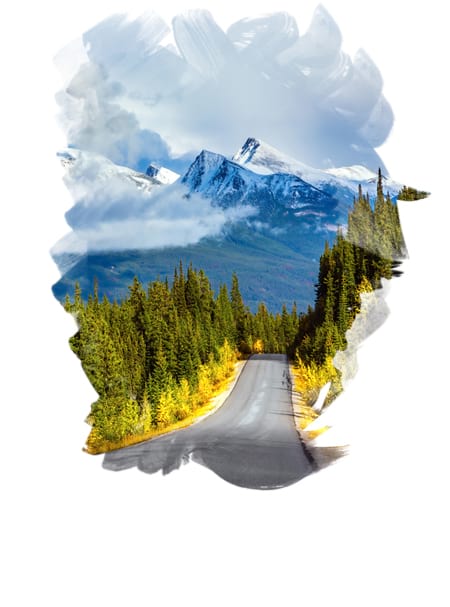

The prairie cities


For mountaineers:
Calgary
Calgary is where the flat Canadian prairies meet the Rocky Mountains. This southern Alberta city is one of the country’s youngest, largest and most energetic centres.
First explore Calgary’s 210 km of walking and bike paths, then take to the mountains. Just an hour’s drive east of the city is Banff National Park, one of the most stunning natural landscapes in Canada. Whether your interested in climbing or skiing, the Rockies are an unparalleled outdoor destination.
When to visit: June till August is the best time of year for good weather. But the parks will be less crowded in April and from the end of September till October.

For shoppaholics: Edmonton
Edmonton, Alberta’s capital, is the northernmost city in Canada with a metropolitan population. With bitter cold winters, the city has come up with some creative ways to keep warm and entertained.
West Edmonton Mall is the city’s biggest attraction. The shopping centre is the largest mall in North America, and the 10th largest in the world. Besides its 800 stores, you’ll find a waterpark, ice skating arena, roller coaster, lagoon and more underneath its roof. Why go anywhere else?
When to visit: If you’re interested in avoiding snow and Edmonton’s icy cold winters, head to the city from June till August, when it is warm and there are a range of festivals.
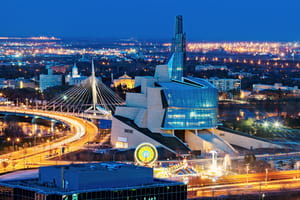
For the museum-minded: Winnipeg
Considered the beginning of Canada’s Western frontier, Winnipeg is the gateway to the prairies. The city has been a major transcontinental hub since the 19th century.
Winnipeg has gradually been staking its claim as a city of culture and educational achievement. It’s home to the Canadian Museum for Human Rights, one of Canada’s most notable and one-of-a-kind museums, as well as the Winnipeg Art Gallery, which boast the world’s largest collection of Inuit art.
When to visit: Like most of Canada, don’t travel during January or February (unless you’re here for the ice hockey). The summer months are much more pleasant for exploring the city.
Book your Canada car hire now
 Book by phone
+44 203 3186 960

The coastal metropolis
Vancouver
A city for the outdoor enthusiast and the urbanite, Vancouver is a showcase for some of the best adventures Canada has to offer. From urban parks and rugged scenery to top notch entertainment venues and a creative culinary scene, Vancouver has something for every traveller.
The great outdoors – For a scenic outdoor experience, have a picnic in Stanley Park or take a relaxing walk through the Van Dusen Botanical Garden. If you’re interested in something a little wilder, hike 850 metres up Grouse Grind or go camping along the Fraser River. Interested in some other impressive scenery further out of the city? Drive to Whistler and breath in the mountain air while skiing or biking.
Metropolitan – Enjoy Vancouver’s waterfront while taste testing a range of locally crafted brews. Restaurant hop in the city’s Gastown district, where you’ll find iconic culinary creations, or grab a quick bite in Granville Island Public Market. For shopping, Yaletown is the place to be. There is also a wealth of galleries and museums to keep you occupied on a rainy day.
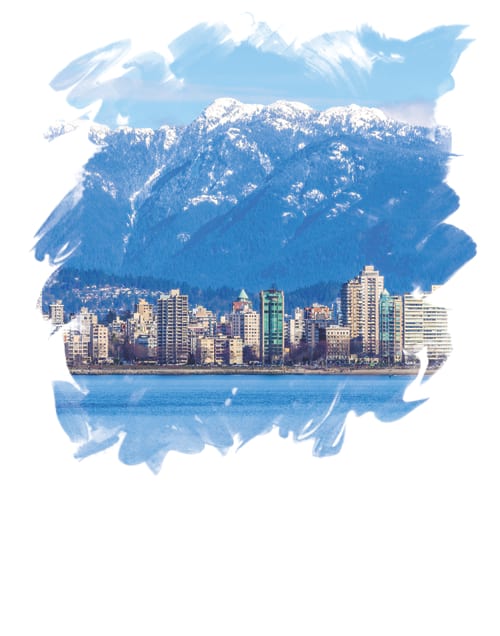

Province capitals
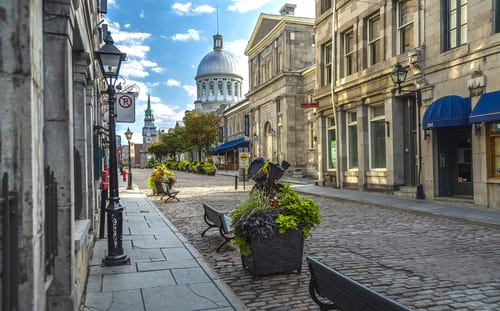
Montreal
The cultural heart of Quebec, Montreal is a showcase of the newest and oldest characteristics of Canada. The metropolitan island is a greater mix of European and North American influence than anywhere else in the country. Old cobbled roads are tucked in between shiny skyscrapers, while futuristic public art contrasts with historic landmarks.
The city is known for retaining a strong connection to its heritage, working hard to maintain the French language and Catholic religion. Artistic celebrations are not taken lightly here either. Over 90 festivals throughout the year highlight old, new and upcoming artists.
When to visit: If you’re interested in Montreal’s festival line up, June till August is the best time to go. But if you’re looking to avoid the tourist crowds, Autumn is a lovely time to explore the city.
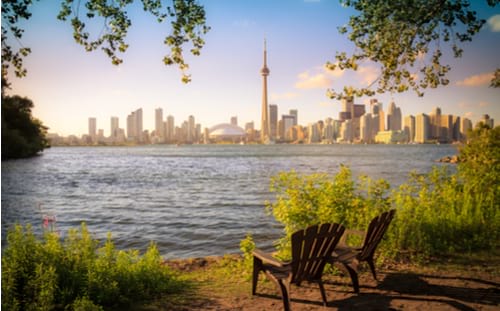
Toronto
Toronto can no longer be mistaken as a small-scale New York with less attitude or stuff. Over the decades, this major Canadian city has defined itself as a destination in its own right. Often mistaken as the capital of Canada – Torontonians like to think of it as such – the city is multicultural hotspot with a young creative energy running through its veins.
Toronto’s cultural allure has breed and attracted beloved musicians, filmmakers and artists. Its restaurants pull together and blend the city’s different ethnic backgrounds into one, producing drool-worthy dishes. Toronto also has a collection of unique landmarks, both natural and man-made.
When to visit: Like Montreal, the summer months are filled with festivities and the streets are lined with tourists. The hot weather means you can enjoy the beaches and waterfront to the fullest but prices also rise. Travel during the shoulder seasons for pleasant weather and less crowds.